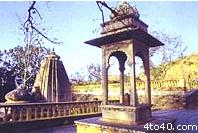

Our sincere gratitude towards Mr. Brijesh Rawat for bringing up an idea of Makhloga website. Without his encouragement and guidance, this website would not be possible. Makhloga Community
Rajputs (Rajaputra) are a sub-group of hindu Kshatriya varna. They have a hindu Jati (an endogamous group within the Hindu social system). Rajput literally means Son-of-a King. They are divided into 36 major clans, names of which are recorded in several texts including the Kumarpala Charita of Jayasimha, and Prithviraj Raso of Chandbardai. The Rig Veda is the first and most important of the four Vedas and rajput rishis (rajrishi) are mentioned in it. To each of its hymns the name of the seer or Rishi to whom it was revealed is prefixed. It thus becomes evident on the authority of these very names (such as Vasishta, Viswamitra, Agastya, etc.), all of which belong to men born in various manvantaras, that centuries, and perhaps millenniums, must have elapsed between the dates of their composition. The Gayatri, the most sacred hymn of the Rig Veda, is taken from the third of the ten cycles of hymns, the cycle of the Rajaputra Sage Viswamitra.
(Mahabharata, Ramopakhayana, 3.266.61) Bhagwan Ram and Lakshmana are referred to as Rajaputra in Mahabharata. Bhagwan Buddha was also referred to as Rajaputra in Buddhist texts. Dr. Rhys Davids in his "Buddhism, Its History and Literature: Page 27" says about Lord Buddha: The family name was certainly Gautama.......It is a curious fact that Gautama is still the family name of the Rajput chiefs of Nagara, the village which has been identified with Kapilavastu.
(Srimad Bhagavatam, 1.12.311) Abhimanyu's son Parikshit is called Rajaputra in Bhagvat Purana. Rajaputras have also been referred to in Kautilya's (350-283 B.C) Arthashashtra, Kalidasa's (1st century B.C) Malvikagnimitra, Asvaghosha's (80-150 A.D.) Saundarananda, Banbhatta's (7th century A.D.) Harshacharita and Kadambari and Kalhana's (12th century A.D.) Rajatarangini. A.D) records that the Governor of Bhukti of Pundravardhana, Rajaputra-Dev-Bhattaraka, was a son of the emperor, bearing the title Uparika Maharaja and 'rendering his homage to the king'. Rajputra are also mentioned in Sumandala Copper Plate inscription of Prithvigraha, Gupta era (570 A.D). There are Rajputra references in many Licchavi inscriptions (Recorded in D.R. Regimi's, Inscriptions of Ancient Nepal, Abhinav Publications, ISBN 0391025597). Rajputra Vajraratha, Babharuvarma, and Deshavarma are mentioned in the inscriptions of Sikubahi (Shankhamul) which describe the reigns of Licchavi kings Gangadeva (567-573 A.D) anDamodarpur copper-plate inscription of Kumaragupta III (533 d Amshuvarma (605-621 A.D) respectively. The inscriptions of Sanga mentions the name of Rajputra Vikramasena, Gnoli inscription mentions Rajaputra Jayadeva, inscription of Deopatan mentions Rajputra Shurasena, and the inscriptions of Adeshwar mentions the Rajaputras Nandavarma, Jishnuvarma and Bhimavarma. In 606 A.D. King Harshavardhana of Kannauj was crowned as Rajaputra Siladitya. Following excerpt from Page 146, of Advanced History of India written by R.C. Majumdar, H.C. Raychaudhuri, and Kaukinkar Datta, ISBN 0333 90298 X: It is however, certain that Harsha found himself at the head of the kingdom of his brother as well as that of his brother-in-law. But he contended himself at first with the modest title of Rajaputra Siladitya. Apshad inscription of Adityasena (8th century A.D) mentions Madhavagupta who is identical with Madhavgupta, the Malawa Rajaputra of Bana's Harshacharita. Nadol Plates of 1161 A.D. mention Rajaputra Kirtipal, the progenitor of Songara (Svarnagiri) Chauhan dynasty of Jalore. Delhi Shivalik Pillar inscription, dating to A.D. 1163 of Chauhan King Virgharaj IV (Bisaldev) refers to his Mahamantri (Chief Minister) as Rajaputra Sallakshanpal.
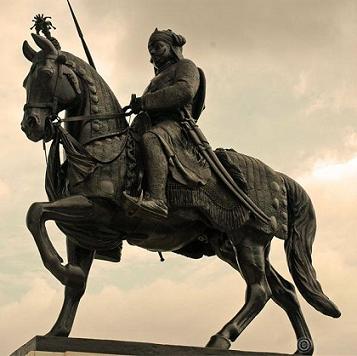
Maharana Pratap riding Chetak
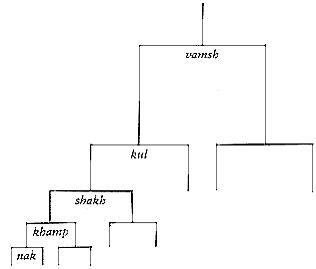
Origin and Geographical PresenceRajputs are indigenous to India. Historians have wrongly tried to identify rajputs as descendants of Aryan Invaders, Scythians, Huns etc. Genetic research shows, there was never any aryan invasion of India. In addition Indian castes have no genetic influx from "foreigners". Geneticists, Sanghamitra Sahoo and Toomas Kivisild, in a 2006 paper (click the paper to read it), have concluded: . . . chromosomal data consistently suggest a largely South Asian origin for Indian caste communities and therefore argue against any major influx, from regions north and west of India (from so called cradle of civilization), of people associated either with the development of agriculture or the spread of the Indo-Aryan language family. Anthropologist, Sir Herbert Risley, writes on Page 60 of his book, People of India: . . . we have good historical reason for believing that the scythian invaders of India came from a region occupied exclusively by broad headed races and must themselves have belonged to that type. They were by all accounts, nations or, hordes of horsemen with broad faces and high cheek bones, and short and sturdy of stature, . . . . In their original homes in central Asia steppes their manner of life was that of pastoral nomads, and their instincts were of the predatory order. It seems therefore prima facie unlikely that there descendants are to be looked for among tribes who are essentially of the long headed type (Rajputs), settled agriculturists with no tradition of nomadic or marauding past. Rajputs predominantly belong to three lineages: the Suryavanshi (Solar Race), the Chandravanshi (Lunar Race), and the Agni vanshi (Fire Born). Some scholars also include Rishi vanshi, Nag Vanshi and Vayu Vanshi as separate classes. SuryavanshiSuryavanshi rajputs trace their lineage to the Vedic Sun - Surya. Lord Rama was also born in this lineage. Suryavanshi rajputs ruled over Mewar, Marwar, Amber, etc. ChandravanshiSomvanshi/Chandravanshi rajputs descended from Som (the vedic deity Soma or Moon). Chandravanshi and Yaduvanshi are from the same line which bifurcated at King Yadu when his father banished him from becoming the king. Gujarat, Jaisalmer was ruled by Chandravanshi rajputs. The Yaduvanshi trace there lineage to Lord Krishn. AgnivanshiAgnivanshi rajputs have a mythological belief that they originated from fire. Bundi, Kotah, Jalore, Sirohi, Delhi were ruled by Agnivanshi rajputs. In reality Agnivanshi rajputs are also a sub-division of Suryavanshi and Chandravanshi rajputs. Each vansha is divided into many cula and each cula is further divided into many shakha. For a pictorial description please see the figure:
For example Suryavanshi rajput kula, Rathore, is divided into these shakha: Dhandhul, Bhadail, Khokra, Jodha etc; Similarly Guhilote cula is subdivided into these shakha: Aharya (at Doongarpur), Sisodiya (at Mewar), Peeparra (at Marwar), etc. Each shakha has its Gotra Acharya, a genealogical creed, describing the essential peculiarities, religious tenets and pristine locale of the clan. It is a touchstone of affinities and guardian of the laws of intermarriage. Rathore Gotra Acharya -- Gautam gotra, Mardwunduni Shakha, Shukra-Acharya Guru, Garroopata Agni, Pankhini Devi. These twelve of 36 clans of rajputs further subdivide:
Rest of the 24 clans are 'Eka' and do not divide further:
Myths
One version of the story of Agni kula origins is that four
warriors, Agnikul, Yadaukul, Suryakul and Odak, whose names are given
to the Rajput clans, sprang from the sacred fire (Agni-kunda)
in a ceremony performed by
Sage
Vashishtha near
Mount Abu. Sage Vashishta undertook this Yagya to develop warriors
who could help the ordinary mortals against the demons. Rajputs reside mainly in northern, western, eastern and central states of India. Rajasthan, which has a very high concentration of Rajputs, is located in northwestern India, near the Khyber Pass route used by most foreign invasions of India, including the Arabs, Afghans, Turks, Mughals, and other Islamic invaders of the Middle Ages. In his New History of India, Stanley Wolpert wrote "The Rajputs were the vanguard of Hindu India in the face of the Islamic onslaught." Rajputs live in Rajasthan, Gujarat, Himachal Pradesh, Madhya Pradesh, Uttar Pradesh, Bihar, Haryana, Punjab, Jammu and Kashmir and Maharashtra.
The Rajput Rule In India
It was also a period of spread of literacy. Numerous inscriptions from this period have been found. A significant fraction of them are by people who were unaffiliated with the nobles, suggesting that education was spreading among the common people. The literature composed in this period is in Sanskrit and in Apabhramshas which constitutes a large segment of the classical Indian literature. The Paramara king Bhoj of Dhara was not only a patron of scholars, but was himself a distinguished and prolific scholar. His Samarangana-sutradhara deals with architecture and Raja-Martanda is a famous commentary on Yoga-sutra. The intermarriage among the Rajput clans interlinked different regions of India, making it easier for the trade and scholarship to flow from one part of the country to another. Rajput kings were very secular in character and permitted all faiths to flourish in their domains. Rajputs practice Vedic, Shaiva, Vaishnava, Shakti and occasionally Jain traditions; they supported Buddhists, Zoroastrians and Sufi traditions as well. The vast majority of Rajputs practice Hinduism. There are some Rajputs who follow the Sikh panth, and they often intermarry with Hindu Rajputs even today.
Social hierarchyRajputs supported Brahmins as scholars and priests. However, Rajputs had their own family priests, known as the Purohits. Some scions of noble Rajput families would officiate themselves as priests in their Hindu temples. For example, the Sisodia kings of Mewar considered themselves as the regents of the Eklingji, a manifestation of Shiva, and serve as the high priest of the deity as well as ruler of the state. JauharWhen the outcome of a battle was against the Rajputs, jauhar would be committed by Rajput women and children in the night and next morning men would commit saka. Brahmin priests would chant Vedic mantras and Rajput women wearing their marriage dresses, along with their young children, embrace sandalwood flames. SakaThe next morning after taking a bath, the men would wear kesariya and apply the ash from the maha samadhi of their wives and children on their foreheads and put a tulsi leaf in their mouth. Then the palace gates would be opened and men would ride out for complete annhiliation of the enemy or themselves. Rajput men and women could not be captured alive.
When
Hindus fought against other
Hindus there were never any
johars or saka because the defeated were treated with
dignity. However, history records very few instances wherein a Rajput
king sued for peace after a battle reversal and the Muslims initially
agreed to the peace terms, only for the Rajputs, and their women and
children, to be slaughtered upon surrender and once the pols or
gates of their mighty fortresses were opened.
Rajput ArmiesPredominantly consisted of cavalry. They bred high quality horses, such as Marwari and Kathiawari. Rajputs fought with cocked wrist and rarely used the tip of the sword to inflict a wound. Sirohi sword was very well liked by rajput. Padmanabh, in his Kanhadade-Prabandh, describes Rajput warriors: They bathed the horses in the sacred water of Ganga. Then they offered them Kamal Puja. On their backs they put with sandal the impressions of their hands... They put over them five types of armour, namely, war armour, saddles acting as armour, armour in the form of plates, steel armour, and armour woven out of cotton. Now what was the type of Kshatriyas who rode these horses? Those, who were above twenty-five and less than fifty in age,... shot arrows with speed and were the most heroic. (Their) moustaches went up to their ears, and beards reached the navel. They were liberal and warlike. Their thoughts were good ... They regarded wives of others as their sisters. They stood firm in battle, and struck after first challenging the enemy. They died after having killed first. They donned and used (all the) sixty-six weapons. If any one (of the enemy ranks) fell down they regarded the fallen person as a corpse and saluted it. Rajputs and Invasions of IndiaThe Rajputs suffered the brunt of the aggression from various Mongol-Turkic-Afghan warlords who repeatedly invaded the Indian subcontinent, then known as Hindustan. Hindustan was one of the most economically prosperous regions in the world till 18-th century and had grabbed the attention of several neighbouring Islamic kingdoms. Organization of Indian kingdoms during invasions
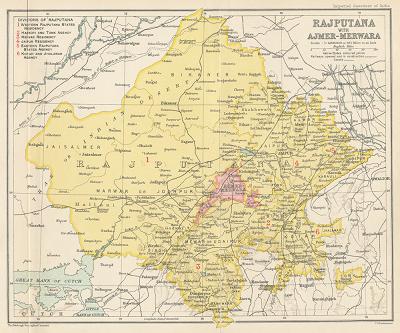
Rajputana Agency and Ajmer-Merwara province, 1909William Wilson Hunter describes in Chapter X of his book, The Indian Empire, Its People, History And Products, the organization of Indian kings and how they fought these invaders. Within a hundred years after his (Muhammad's) death, his followers had invaded the countries of Asia as far as the Hindu Kush. Here there progress was stayed and Islam had to consolidate itself during three more centuries before it grew strong enough to grasp the rich prize of India. But almost from first the Arabs had fixed eager eyes upon that wealthy country. Fifteen years after the death of prophet, Usman sent a sea expedition to Thana and Broach on the Bombay coast (647 ? AD). Other raids towards Sindh took place in 662 and 664 with no results. The armies of Islam had carried the crescent from the Hindu Kush westwards, through Asia, Africa and Southern Europe, to distant Spain and Gaul, before they obtained a foothold in Punjab. This long delay was due, not only to the daring of individual tribes, such as Sindh Rajputs, just mentioned but to the military organization of the Hindu Kingdoms. Each of these groups of kingdoms, alike in the north and in the south, had a certain power of coherence to oppose to a foreign invader; while the large number of groups and units rendered conquest a very tedious process. For even when the overlord or central authority was vanquished, the separate units had to be defeated in detail, and each state supplied a nucleus for subsequent revolt. We have seen how the brilliant attempt in 711, to found a lasting Muhammedan dynasty in Sindh, failed. Three centuries later, the utmost efforts of two great Musalman invaders (Mahmud of Ghazni and Mohammed Ghori) from the north-west only succeeded in annexing a small portion of the frontier Punjab Province between 977 and 1176 A.D. The Hindu power in Southern India was not completely broken till the battle of Talikot in 1565; and within a hundred years, in 1650, the great Hindu revival had commenced which under the form of Maratha confederacy, was destined to break up the Mughal Empire in India. That Empire, even in the north of India, had only been consolidated by Akbar's policy of incorporating Hindu chiefs into his government(1556-1605). Up to Akbar's time, and even during the earlier years of his reign a series of Rajput wars had challenged the Muhammadan supremacy. In less than two centuries after his death, the successor of Akbar was a puppet in the hand of the Hindu marathas at Delhi. The popular notion that India fell an easy prey to the Musalmans is opposed to the historical facts. Muhammadan rule in India consists of a series of invasions and partial conquests, during eleven centuries, from Usman's raid, circ.647, to Ahmad Shah's tempest of invasion in 1761 A.D. At no time was Islam triumphant throughout the whole of India. Hindu dynasties always ruled over large areas. At the height of the Muhammadan power, the hindu princes paid tribute, and sent agents to the Imperial court. But even this modified supremacy of Delhi lasted for little over a century (1578-1707). Before the end of that brief period the Hindus had begun the work of reconquest. The native chivalry of Rajputana was closing in upon Delhi from the south; the religious confederation of the Sikhs was growing into a military power on the north-west. The Marathas had combined the fighting powers of the low-castes with the statesmen ship of the Brahmans, and were subjecting the Muhammadan kingdoms throughout all India to tribute. So far as can now be estimated, the advance of the English power at the beginning of the present century alone saved the Mughal Empire from passing to the Hindus. Corroborating Hunter, Jahangir, son of Akbar, bemoans in his memoirs (Memoirs of the Emperor Jahangueir written by himself, trans. David Price, Oriental Translation Committee, London 1829: republished Calcutta 1904.): And here I am compelled to observe, with whatever regret, that notwithstanding the frequent and sanguinary executions which have been dealt among the people of Hindustan, the number of turbulent and disaffected never seems to diminish; for what with the examples made during the reign of my father, and subsequently of my own, there is scarcely a province in the empire [there were about 14 subahs at the time] in which .... in battle ..... five and six hundred thousand human beings have not, at various periods fallen victims to this fatal disposition to discontent and turbulence. Ever and anon, in one quarter or another, will some accursed miscreant spring up to unfurl the standard of rebellion; so that in Hindustan never has there existed a period of complete repose. This excerpt from Jahangir shows very clearly that Muslims, including Akbar, were always considered alien invaders by rajputs and other Hindus in India Professor Herman Kulke in his book "A History of India, ISBN: 0415154820, Publisher: Routledge; 3rd edition (March 1998)" records: Ala-ud-din was also quite realistic when he mentioned that his order would be obeyed only upto a distance of about 100 miles from Delhi; beyond that limit military intervention was required if he wanted to impose his will on the people. This shows that even at the height of power, Khilji barely controlled the outskirts of Delhi and rest of India was not under his control. Hunter and Kulke capture the conditions in India at the time of invasions quite well. Kulke's excerpt also explains the high density of Muslim population in capitals of Muslim rulers, like Hyderabad, Rampur, Lucknow, Delhi etc because in areas where there orders were accepted the Muslim rulers tried to convert as many Hindus as they could by sword, Jiziya or religious persecution (by breaking Hindu temples and psychologically pushing the Hindus into believing that there's was a weak God). For details on how Jiziya was used as a weapon to do conversions please scroll below and see the section on Protection of Hinduism.
Partial list of Rajputs who fought with the invaders
Bappa Rawal
Muslims started attacking India within a few decades of the birth of Islam. For a few hundred years they had no success. Mohammed Bin Qasim was able to defeat Dahir in Sindh but was routed by Bappa Rawal. Qasim attacked Chittore, which was ruled by Mori Rajputs, via Mathura. Bappa, of guhilote dynasty, was a commander in Mori army and so was Dahir's son. Bappa defeated and pursued Bin Qasim through Saurashtra and back to Sindh. After this resounding defeat of the caliphate at the hands of Bappa in 712 A.D., Sindh mulsims paid tribute to Hindu rajputs. (note Muslim historians rarely recorded the defeats of their kings). Then Mahmud started his raids and was successful in looting Somnath.
Prithviraj Chauhan was born at Ajaymeru (Ajmer) in 1166 A.D. His father was Someshwar Chauhan and mother Karpuri Devi, a Kalachuri (Chedi) princess, daughter of Achalaraja of Tripuri. Muhammad Ghori attacked India multiple times. First time he was routed in present day Gujarat by Rajputs. Mularaja-II was not even a teen yet and his mother organized the defences of Pattan. Battle was fought at Kayadara near Mount Abu, in 1178 A.D. and Ghori was resoundingly defeated. After this defeat he never entered India through Gujarat. In first battle of Taraori in 1191 Prithviraj Chauhan's cavalry charged and routed the Ghurid cavalry and captured Ghori. Ghori begged for his life. Prithviraj allowed him to go despite his generals asking him not to do so.
Prithviraj Chauhan lived at Taragarh fort which was also known as Ajaymeru after which the town of Ajmer got its name. Following year Ghori came again. Prithviraj advanced with his army and sent a letter to Ghori. In this letter Ghori was asked to return as he had been defeated the previous year and was spared his life. Ghori replied that he was in India on the orders of his brother, Ghiasuddin, and that he could only retreat after he got a word from his brother. This letter was sent in the evening and after sending the letter Ghori moved his camp back a few kilometers to feign retreat. On receiving this letter and seeing Muhammad move his camp back Prithviraj assumed that Ghori was not interested in fighting. Ghori also knew that rajputs did not fight in the night and only started fighting after sun had come up. (This is an ancient Kshatriya practice e.g Mahabharata was also fought mostly in day time). Ghori treacherously attacked in the early morning hours when Prithviraj and his army were sleeping and was able to win this war.
Hammir Dev Chauhan
Prithviraj Chauhan's descendant, Hammir Dev Chauhan ruled Ranasthambpur (Ranthambore). Jalore was ruled by another branch of Chauhans, the Songaras. Ala ud din Khilji usurped Delhi from his father-in-law, Jalal-ud-din Khilji, by killing him in cold blood. In 1299 Ala ud din's mongol general Ulugh Khan sought to quell Hindu resistance in Gujarat and besieged Junagadh and sacked the temple at Somnath. Ulugh Khan had broken the Shivalinga of Somnath and was carrying it back to Delhi. Kanhad Dev Songara, ruler of Jalore, attacked and defeated Ulugh Khan. His son Biramdeo and Jaitra Deora were the generals who commandeered Kanhad Dev's army. They captured the fragments of the Shivalinga. Kanhad had the Shivalinga washed in Gangajal and had the fragments placed at various Shiva temples around Jalore. One of Ala ud din's generals was a neo-Muslim, Muhammad Shah, who had helped Kanhad Dev. This general later went and stayed with Hammir Deo in Ranthambore. Ala ud din wanted him dead, and asked Hammir to hand him over. Hammir replied that he knows how to draw his sword, and anyone who has taken shelter in his fort would not be turned over. Hammir did not consider Khilji king of India. Ala ud din attacked Ranthambore in 1299, but his armies consisting of 80,000 cavalry, led by generals Ulugh Khan and Nusrat Khan, were badly defeated. Nusrat Khan was killed by rajputs in this campaign. Khilji finally came himself in 1301 A.D., and there was a long siege. Hammir was very well prepared. When the fort did not fall after repeated bloody skirmishes Khilji, tired of living in an insect infested swamp for seven months (land outside Ranasthambpur fort is marshy), resorted to diplomacy. Hammir was very suspicious but he heeded to his councilors who told him that sword is not always the best recourse. Ratipal and Ranmal, who were close confidants of Hammir, were sent to the Khilji camp. Ranmal's father was hung by Hammir for treachery and his property was confiscated. Ranmal earned the trust of Hammir by being brave in battles that Hammir fought but perfidy was in his blood. Khilji bribed these two generals of Hammir's army and consequently Ranthambore fell. Every Rajput and Indian takes pride in reciting the couplet extolling the bravery and uprightness of Hammir:
A lioness gives birth to a cub only once; once alone is the word of a good man given; once only does a plantain bear fruit; a woman is anointed only once with oil for marriage; and once alone did Hammira give his irrevocable promise.
Rana Sanga
In Kumbha's lineage was Rana Sangram Singh or Sanga. Ibrahim Lodi, ruler of Delhi, in his expansionary plans to south of Delhi attacked Gwalior and was defeated by Man Singh Tomar but being a Hindu Kshatriya, Man Singh out of magnanimity let Ibrahim go back to Delhi. Lodhi also attacked Rajputana multiple times and Rana Sanga defeated his every attack. Man Singh's descendants fought at Haldighati along with Maharana Pratap against Akbar and showed exemplary bravery. Lodi was defeated by Babur later. Now Babur was having sleepless nights because of Sanga. Babur sent about 1500 choice cavalry to attack Sanga. These were butchered by Sanga's rajputs. This struck mortal fear in the heart of Babur and his forces were completely demoralized. Babur wanted to discuss the terms of his surrender. For discussions Sanga sent his general Silhadi (Shiladitya). Babur agreed to pay a tribute to the Maharana and it was also decided that Peela Khal would be the border between Sanga's domain and Babur.
Battle of Haldighati
June 18, 1576. Before sunrise, the Mughal army was on the move. As
dawn broke, the Bhil lookouts saw the huge force crossing the river
and assembling near Khamnor. Pratap Singh moved his men into the neck
of Haldighati Pass. They halted, prepared to wait for the opportune
moment to strike. The legendary warrior was impressive in his helmet,
and chain-armour over a white tunic (still preserved in Udaipur's City
Palace Museum). He sat proudly upon Chetak, his handsome white
stallion that had been his closest ally in many battles. The horse was
clad in colourful mail that ended with a mask resembling a grotesque
elephant, designed to terrify an opponent's steed and to protect the
horse from the enemy's war elephants, on the assumption that elephants
will not harm younger elephants. Pratap clasped his huge sword in one
hand; his other gripped the ancient banner of the House of Mewar, the
crimson field with the golden face of the Sun God in the centre. The
sun climbed higher. Faces ran with perspiration. The muffled thunder
of the Mughal army came ever nearer. The ground began to tremble.
Soon, a cloud of dust was rising above distant treetops, filtering the
morning sun. The Maharana led his group to confront the larger phalanx
of troops under Qazi Khan. His war elephants brought up the rear.
There was immediate panic. As the rows of youths hailed arrows into
the Mewar ranks, the surprised skirmishers baulked, then stumbled back
across the uneven, rock-strewn terrain. Vicious thorn bushes tore into
their skin and clothing. They collided headlong with the warrior
youths. Chaos reigned. Horses screamed in fear. Swords slashed.
Muskets cracked. Bows twanged; arrows ripped into bodies. Brave men
uttered war cries; others their death howls.
Chetak Smarak
Protection of hinduism
A point to note here is that lot of Muslims, Western and some Hindu historians think that Islam/Muslims did not do conversion of Hindus by sword. The argument they give is that there are so many Hindus still today in India. This is completely wrong because most Muslim rulers in India tried to convert as many as they could. Some of the methods used were threat of execution by sword, Jizya (an exorbitant tax on non-Muslims) and religious persecution. In this excerpt from page 58-59 of "A Rediscovery of India: A new subcontinent" by Ansar Hussain Khan, a Pakistani Historian, is described how the Tughlaq sultanate and its followers converted Hindus to Islam. He used the exemption of paying the jeziya by non-believers as a deliberate method to obtain large scale conversions to Islam. Thousands upon upon thousands of Muslim converts were made in this fashion. He was the first in India to use Jizya methodically for the conversion, and in this he was emulated by many successors on the throne of Delhi. He also cancelled the exemption of Brahmans from paying this tax and re-imposed it upon them. But it was the strength of Rajput sword and later Maratha and Sikh swords that kept Hinduism alive in India. If there were no Rajputs, Marathas or Sikhs in India, then India would be just like Iraq, Iran, Turkey, or Pakistan in terms of religion of the population. Every month, in the 1000 year presence of Muslims in India there were bloody wars between Hindus and Muslims. This is quite unlike other countries like Iran, where non-Muslims, after loosing a couple of wars gave the Muslims a free hand in converting there population to Islam. Presence of Rajput generals in Mughal army was a blessing in disguise for the Hindu population as the Mughal army when headed by a rajput general could not engage in wanton destruction of Hindu temples as well as mass conversion of Hindus to Islam. The preservance of Hinduism in India by the Rajput sword against the entire might of Islamic rulers is the most glorious achievement by a race in the annals of world history and every one should know this fact, more so Indians and most definitely each and every Rajput. In his Annals and Antiquities of Rajasthan James Tod wrote: What nation on earth could have maintained the semblance of civilization, the spirit or the customs of their forefathers, during so many centuries of overwhelming depression, but one of such singular character as the Rajpoot? . . . Rajasthan exhibits the sole example in the history of mankind, of a people withstanding every outrage barbarity could inflict, or human nature sustain, from a foe whose religion (Islam) commands annihilation; and bent to the earth, yet rising buoyant from the pressure, and making calamity a whetstone to courage. . . . Not an iota of their religion or customs have they lost. . . . Contrast this to how Muslims converted entire Iranian kingdom, where a very ancient religion of Zoroaster flourished, on the edge of the sword in a very short amount of time and Spain which was conquered and ruled by Islam for 700 years was majority Muslim state till Spanish Christian Kings began driving out the moors and reconverted Muslims back to Christianity. In India, Hindu religion has no concept of conversion. One has to be a born Hindu. (Though of late as a reaction to conversion of tribals by missionaries some Hindu groups have concocted a recipe to make a person Hindu!) This section is from Page 3 of: The Parsees, Their History, Manners, Customs & Religion. Dosabhoy Framjee. Pub: London: Smith, Elder and Co., 65, Cornhill: 1858.
Suffice it to say, that with Yezdezird, the forty-fifth king in the
descent of the race of Kaimurs, ended the ancient Persian monarchy.
The neighbouring and wealthy empire of Persia presented too tempting a
prize to the fanatic and ambitious spirit, evoked by Mahomed, to
remain long unmolested, and in the middle of the seventh century of
the Christian era, the Arab sword invaded Persia, under Caliph Omar.
In a fierce and well-contested battle with the Persians at the village
of Nahavand, about fifty miles from the ancient city of Ecbatana, the
fate of the empire was decided.....Yezdezird, abandoning his kingdom
as lost, fled the country; and after wandering in solitude and
disguise for a period of ten years, was at last treacherously slain by
a miller to whom the secret of his identity had been confided (651
AD). .... To escape the sword of Islam some Zoroastrians landed on the coast of Gujarat in 716 A.D. Rajput king of Gujarat gave them land to settle and put no religious restriction on the Zoroastrians. The magnanimity of the Hindu King allowed the Zoroastrian religion to flourish. In modern era some of the top industrialists of India e.g. J.R.D. Tata, Ardeshir Godrej, symphony conductor Zubin Mehta, etc. belong to the the Parsi (Zoroastrian) community.
 Custom Search
|